
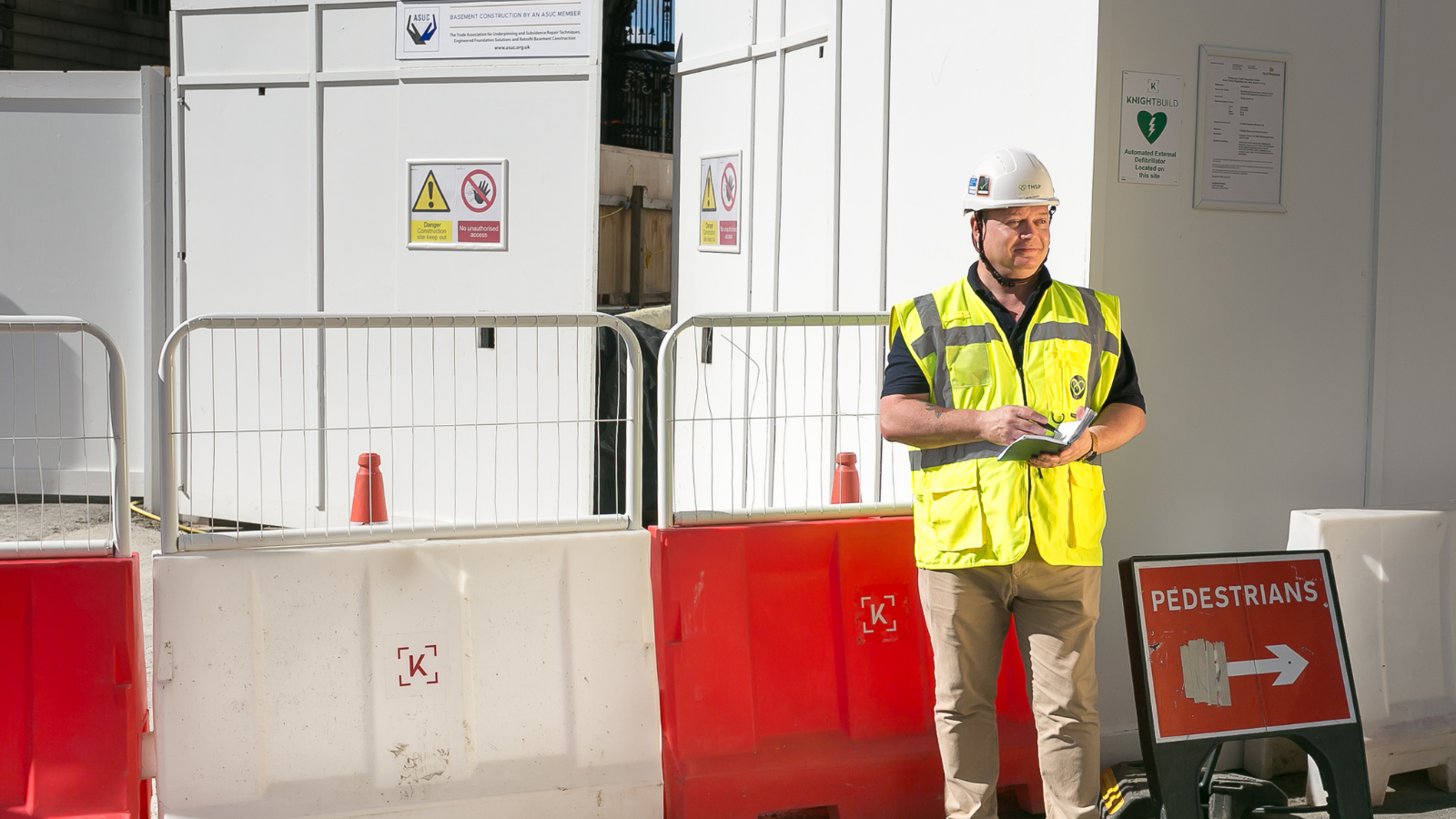
Traffic Management Plans for Safe Site Movement
Effective traffic management helps ensure people and vehicles can move safely around a construction site, reducing risk and supporting efficient site operations.
THSP helps you design practical traffic management plans that reduce risk and improve site efficiency.
Why traffic management matters
Construction sites can present significant risks where vehicles and pedestrians interact. A clear plan helps prevent incidents and keeps work moving safely.
Construction sites can present significant risks where vehicles and pedestrians interact. A clear traffic management plan helps reduce these risks, supports safe working practices and keeps projects running efficiently. The law also requires construction sites to be organised so that pedestrians and vehicles can move around safely.
What is a Traffic Management Plan?
A traffic management plan sets out the arrangements for vehicles and pedestrians to access, move around and exit a site safely. It defines routes, segregation measures and controls to help minimise the risk of collisions and other incidents.
Our support
We work with you to develop a site-specific plan that considers:
- Vehicle routes and access points
- Pedestrian safety and segregation
- Delivery timings and site logistics
- Speed restrictions and control measures
- Site layout and operational constraints
The result is a clear, practical plan that supports safe and efficient operations.
Plan safer site movement
Reduce risk and improve site efficiency with a clear traffic management plan. Speak to our team to get support designing a plan tailored to your site.
Need a Traffic Management Plan?
THSP can help you develop a practical, site-specific plan that supports safe site operations and helps manage vehicle and pedestrian risks.
Arrange Your Traffic Management PlanFrequently Asked Questions About Construction Traffic Management Plans
Is a traffic management plan a legal requirement on construction sites?
Not in every case. CDM 2015 and the Workplace (Health, Safety and Welfare) Regulations 1992 require construction sites to be organised so that pedestrians and vehicles can move around safely. While the law does not specifically require a written traffic management plan in every situation, many contractors use one as a practical way of demonstrating compliance and managing site risks. In addition, principal contractors, clients or project-specific requirements may require a documented traffic management plan before work begins on site.
What should a construction site traffic management plan include?
A site traffic management plan should cover vehicle access and exit routes, internal vehicle movement routes, pedestrian routes and segregation measures, delivery timings and logistics, speed restrictions, turning areas and controls for reversing vehicles. It should also account for how the site layout may change as the project progresses. THSP works with you to produce a plan that is specific to your site rather than a generic template.
Why is vehicle and pedestrian segregation important on construction sites?
The interaction between vehicles and pedestrians is one of the most significant causes of fatal and serious injuries on construction sites. Segregating vehicle and pedestrian routes wherever possible and putting clear controls in place where segregation is not practical, significantly reduces the likelihood of a collision. A well-designed traffic management plan puts these controls on paper and makes them easy for everyone on site to understand and follow.
When should a traffic management plan be produced?
Ideally, a traffic management plan should be developed before the construction phase begins, as part of the wider site planning process. Producing it early allows vehicle routes, access points and pedestrian arrangements to be designed into the site layout from the outset rather than retrofitted once work is underway. THSP can support you at any stage of a project, including reviewing and updating an existing plan as site conditions change.
Does a traffic management plan need to be updated during a project?
Yes. As a construction site develops, vehicle routes, access points and site layout will change. A traffic management plan should be reviewed and updated whenever there are significant changes to site operations or layout. THSP can support you with both the initial plan and any revisions needed as the project progresses.
Who is responsible for implementing a traffic management plan on site?
Under CDM 2015, the principal contractor is responsible for planning, managing and monitoring the construction phase, including the effective management of site traffic risks.
Can THSP help with traffic management plans for smaller sites or short-term projects?
Yes. Traffic management risks exist on sites of all sizes and even a small project with limited vehicle movements benefits from a clear plan. THSP produces plans that are proportionate to the scale and complexity of your site, so you are not receiving an overly detailed document for a straightforward project.
How does a traffic management plan fit alongside other health and safety documentation?
A traffic management plan typically sits alongside the Construction Phase Plan and other site-specific risk assessments and method statements. THSP can help ensure these documents are consistent with each other and that the traffic management arrangements are properly reflected in your wider site safety documentation.
Do I need a traffic management plan for a small construction site?
In many cases, yes. While the level of detail should be proportionate to the size and complexity of the project, even smaller sites can present risks where vehicles and pedestrians share the same working area. A simple, site-specific traffic management plan can help identify hazards, establish safe routes and demonstrate that risks have been considered and managed appropriately.