

The Wheelchair Rugby League World Cup got underway today in Wollongong, Australia, and everyone at THSP has a particularly good reason to be following it.
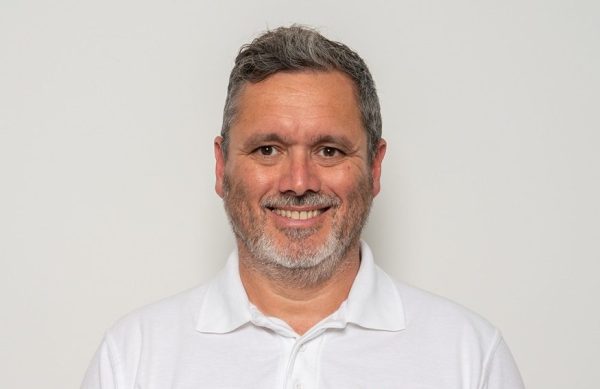
Our colleague Joe Coyd is part of the England squad heading into the tournament as defending world champions. For those of us at THSP, that makes this World Cup rather special. Joe joins a ten-player England squad that also includes some of the biggest names in the sport, including the ridiculously talented Jack Brown and Rob Hawkins.
So, first things first: good luck, Joe, and good luck England.
But if you have never watched Wheelchair Rugby League before, I would also encourage you to give it a try. I did, and I was hooked.
My introduction to the sport came from watching England play France around five years ago. England lost, but I was blown away by what I had just watched. Since then, I have become a genuine fan of the game.
And yes, I said the game, because that is probably the most important thing to understand about Wheelchair Rugby League.
This isn’t an exhibition version of rugby league. It isn’t rugby league slowed down or softened. It is rugby league played in a chair.
The fundamentals will be instantly recognisable to anyone who follows the running game. Five players are on court, the ball must be passed backwards, six tackles form a set and a try is worth four points. Instead of physically bringing down the ball carrier, defenders remove a tag attached to the player’s shoulder. Conversions and drop goals are struck with the fist rather than kicked. Matches are played over two 40-minute halves.
Then there is the contact.
Lots of contact.
Australia captain Bayley McKenna perhaps captures the attraction better than anyone when he says, “you can hit people as hard as you want as long as you’re going for the tag”.
Watch him play and you’ll understand what he means.
Wheelchairs collide at speed. Players spin, accelerate and change direction in fractions of a second. There are huge hits, wonderful passing moves, tactical battles and moments of individual brilliance.
If England and Australia cross paths in the latter stages, seeing Bayley McKenna coming up against the likes of Joe Coyd, Mason Billington or Lewis King should be worth staying up for on its own.
And then there is the skill.
England have some extraordinary players. Jack Brown has long been regarded as one of the greats of the game, while Rob Hawkins arrives at this World Cup after a remarkable domestic season in which he scored 95 tries. Nathan Collins, meanwhile, kicked 172 goals this season.
Across the Channel are France and players such as Jérémy Bourson, Gilles and Nicolas Clausells, all part of a French squad that will again present a formidable challenge.
England and France have history.
Anyone who watched the last World Cup final in Manchester will know exactly what I mean.
It was a wonderful sporting contest, with England eventually beating France 28-24 after Tom Halliwell scored the decisive try with only three minutes remaining. The match ebbed and flowed, England and France traded the lead, and some of the personalities involved ensured there was no shortage of theatre along the way. BBC Sport World Cup final coverage
Heroes, villains, controversy, enormous hits and exceptional skill. What more could a sports fan want?
But there is something else about Wheelchair Rugby League that I particularly like.
It is one of the relatively few sports where the usual boundaries simply don’t define who gets to take part.
Men and women can play alongside and against each other. Players with different physical abilities compete in the same team, with the international rules permitting up to two players without a physical disability on court at any one time.
I think that is far more powerful than applying labels to the people playing it.
The sport is inclusive by design.
Everybody is playing the same game, to the same rules, competing for the same ball and trying to win the same contest.
And perhaps that is one reason that, once the game starts, you very quickly stop thinking about the chair.
You start watching the player.
You notice the acceleration, the chair control, the passing, the defensive positioning and the extraordinary hand-eye coordination required to control the chair at speed while receiving and moving a rugby ball.
And, inevitably, you pick your favourites.
You also find one or two opposition players you desperately want England to beat.
That’s sport.
This year’s tournament brings together England, Australia, France, Wales, Scotland, Ireland, New Zealand and the USA. England began their defence of the trophy against Wales earlier today, with matches against the USA and Ireland still to come in the group stages.
England go into the tournament as the defending champions and the number-one ranked side, but retaining the trophy will be anything but straightforward. France remain an obvious threat, Australia have home advantage, and New Zealand are making their Wheelchair World Cup debut.
For THSP, though, there is an additional reason to be watching.
One of the people pulling on that England shirt is one of our own.
Joe Coyd was part of the England team which lifted the trophy in 2022 and is back in the squad looking to make it back-to-back World Cups.
It is an extraordinary achievement, and everyone at THSP is enormously proud to see a colleague representing his country on the biggest stage his sport has to offer.
So, Joe, from all of us at THSP: good luck.
To the entire England squad, we wish you a fantastic tournament.
And to everyone else: if you have never watched Wheelchair Rugby League, give it a chance.
Watch the speed. Watch the skill. Watch the chair control. Watch some of the hits. And watch what happens when some of the best players in the world meet with a World Cup on the line.
For UK viewers, the tournament is being shown exclusively on Premier Sports, with plenty more action to look forward to as England continue their World Cup campaign.
I suspect you’ll understand why I became a fan.
Come on England.